
Need help? Call us:
+923207079688
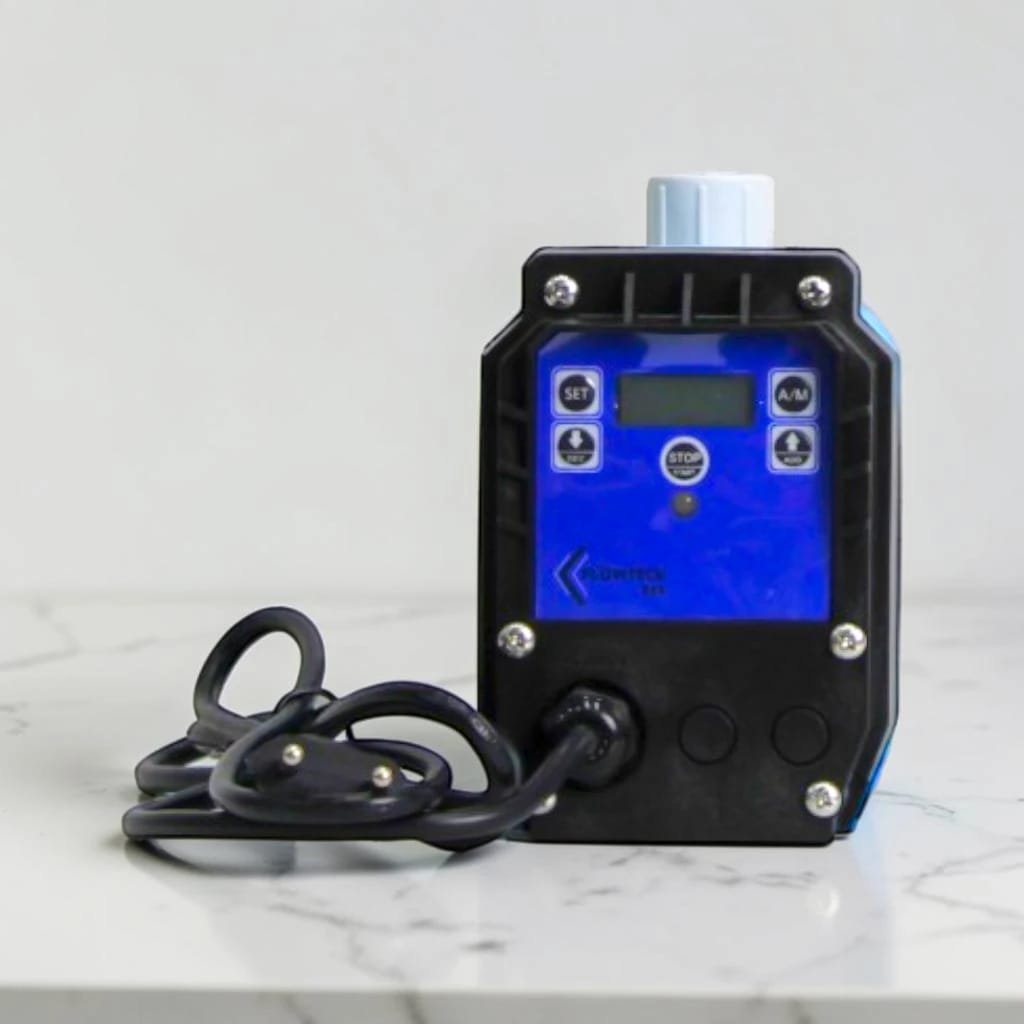
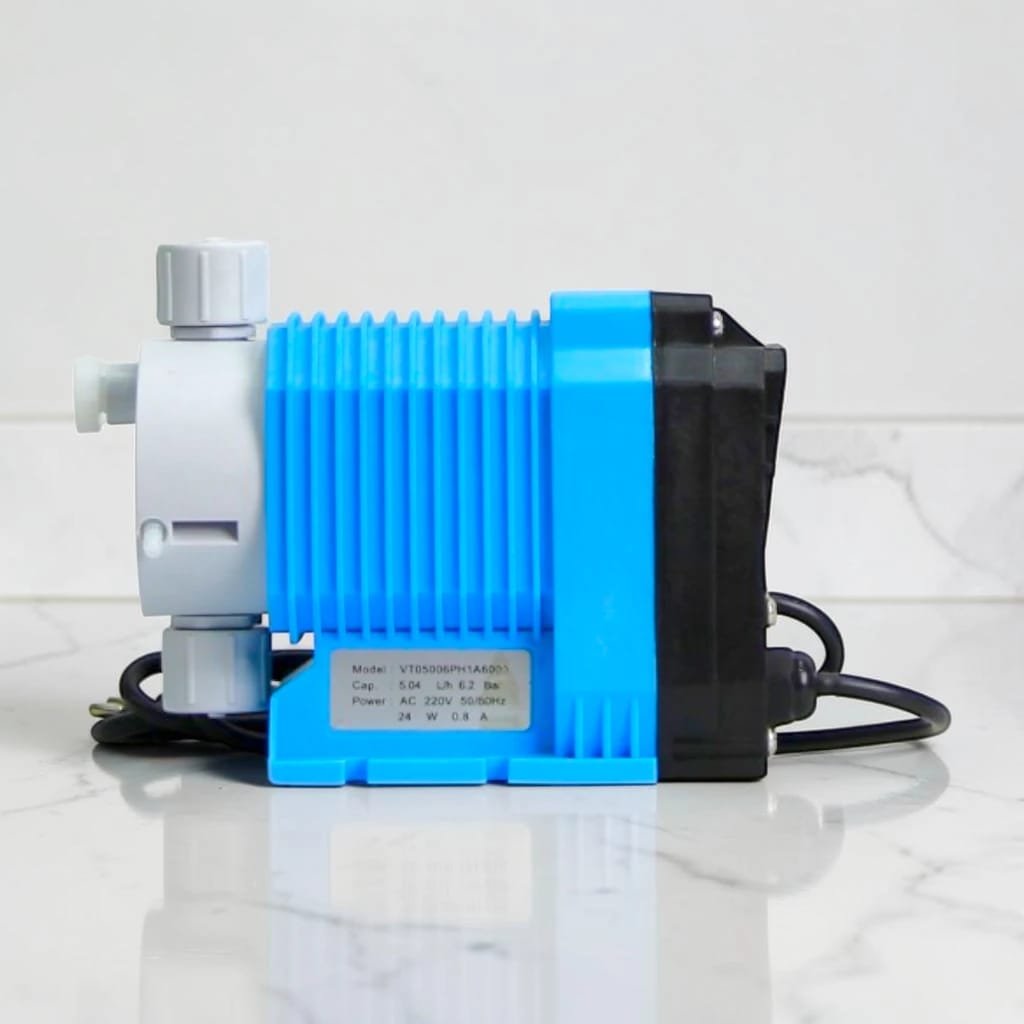

RO Dosing Pump – Reverse Osmosis Water Treatment Dosing Pump in Pakistan
₨ 24,500.00 Original price was: ₨ 24,500.00.₨ 19,499.00Current price is: ₨ 19,499.00.




Have any Questions?
Feel free to Get in touch
The RO Dosing Pump is designed for controlled and consistent chemical dosing in Reverse Osmosis (RO) systems and water treatment plants. It is commonly used to inject antiscalant and other compatible water treatment chemicals into the feed water line at a controlled rate.
Chemical dosing is an important part of many RO systems, particularly where feed water has high TDS, hardness, or a high scaling potential. Proper antiscalant dosing can help reduce scale formation on the RO membrane and support stable system performance.
Applications
The RO Dosing Pump can be used in a wide range of water treatment applications, including:
- Reverse Osmosis (RO) plants
- Commercial RO systems
- Industrial RO plants
- Mineral water plants
- Water treatment plants
- Antiscalant dosing systems
- Chemical dosing systems
- Pre-treatment applications
Key Features
- Controlled chemical dosing
- Suitable for RO and water treatment applications
- Commonly used for antiscalant dosing
- Consistent chemical injection
- Compact and practical design
- Easy to install and operate
- Helps support RO membrane protection
- Suitable for commercial and industrial applications
How Does an RO Dosing Pump Work?
The dosing pump draws a treatment chemical from a dosing tank and injects it into the RO feed-water line at a controlled rate. The dosing rate is selected according to the water flow, chemical concentration, feed-water quality, and requirements of the RO system.
When used for antiscalant dosing, the pump introduces the required amount of antiscalant into the feed water before it reaches the RO membrane. This can help control scale formation and support membrane performance.
Benefits
- Helps control scaling on RO membranes
- Provides controlled chemical dosing
- Supports efficient RO water treatment
- Helps maintain consistent treatment conditions
- Suitable for commercial and industrial RO plants
- Reduces the need for manual chemical dosing
- Supports RO membrane performance and maintenance
Installation
The RO Dosing Pump is normally installed with a chemical dosing tank and connected to the RO feed-water line through suitable dosing tubing and an injection point.
During installation, the dosing direction, tubing connections, chemical compatibility, and required dosing rate should be checked carefully. Professional installation is recommended for commercial and industrial RO systems.
Maintenance
Regularly inspect the dosing tube, valves, injection point, connections, and other pump components. Keep the dosing system clean and use chemical-compatible components according to the treatment chemical being used.
The pump should be maintained according to the manufacturer’s recommended procedures to ensure reliable dosing performance.
Important Note
The flow rate, pressure, voltage, dosing capacity, and other specifications may vary depending on the specific dosing pump model. Always verify the pump specifications according to your RO plant requirements before purchase.
Frequently Asked Questions
Q1. What is an RO Dosing Pump?
An RO Dosing Pump is a chemical dosing pump used to inject antiscalant and other compatible treatment chemicals into RO and water treatment systems.
Q2. What chemicals can be used with an RO Dosing Pump?
It is commonly used for antiscalant and other compatible water treatment chemicals. Chemical compatibility should be verified before use.
Q3. Does an RO Dosing Pump protect the RO membrane?
Properly selected and calibrated antiscalant dosing can help control membrane scaling and support RO membrane performance.
Q4. Where is an RO Dosing Pump used?
It is used in commercial RO plants, industrial RO systems, mineral water plants, and various water treatment applications.
Q5. Does the dosing pump automatically dose chemicals?
The pump provides controlled chemical dosing. The level of automation depends on the pump model and the control system connected to it.
Related products

Aqua Rechargeab...

Bottle Handles ...

Buy Digital pH ...

Aqua 1 Year Rep...


Reviews
There are no reviews yet.